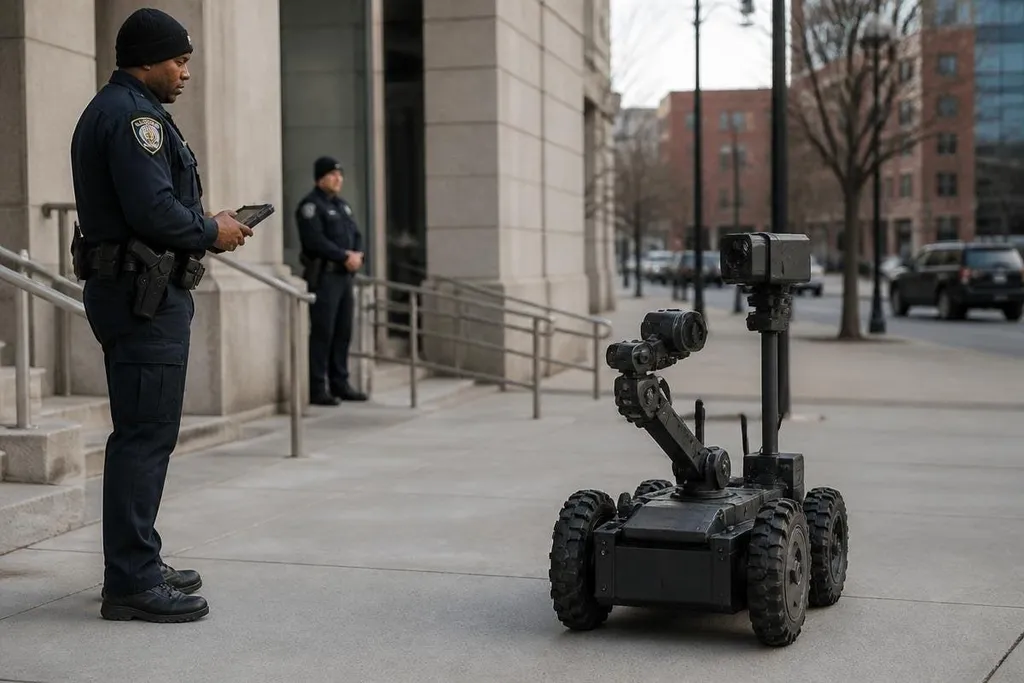
A police robot can enter a dangerous building, watch a public space, or collect video without putting an officer in the same place. Those uses may reduce physical risk, but they also raise a harder question: who controls the data, and what limits the machine?
- A remote camera can watch longer than a person can.
- Stored robot data can affect people who were never suspects.
- Human approval must remain part of searches, arrests, and force decisions.
The machine changes the reach of police work
A ground robot can send live video from a room an officer has not entered. A drone can cover a large area from above. A fixed camera on a mobile robot can record people who happen to pass through its view.
That reach matters because the machine may make surveillance cheaper, longer, or easier to repeat. The department could use a robot for a single emergency, then keep the video for later searches.
The second use changes the civil-liberty question. The same issue applies to software linked to a robot. A system may mark faces, track movement, or connect one image to another record.
Those steps can turn a device that sees into a system that helps decide who gets attention from police. The machine does not need to make an arrest to affect a person’s rights.
A mistaken watch list entry, repeated street tracking, or public release of sensitive video can change how someone works, travels, or joins a protest.
Human control needs a clear meaning
“Human in the loop” sounds useful, but the phrase can hide weak control. An officer may approve a robot’s action after a screen shows only a short alert. That is human involvement, yet the officer may not have enough time or information to check the result.
A real limit should state which decisions a machine may support and which decisions require a person’s direct judgment. A robot may send video from a hazardous site. It should not decide that a person is dangerous, pick a home for a search, or set the level of force without clear human control and legal authority.
Rules also need to cover remote operators. The person steering a robot should be named in department records, and the system should record commands, warnings, and failures. Those logs give investigators something to check when an incident is disputed.
Police robots may store video, audio, maps, and operator logs after a patrol ends. Reporting at Robot24.com can place those records beside the robot, agency, test date, and stated purpose before the article examines who can access the data.
Data creates a second civil-liberty problem
A robot’s camera, microphone, location system, and control software can create a detailed record of a place. That record may include bystanders, children, medical visits, religious gatherings, or people attending a lawful protest.
Before collecting the data, the department should set a purpose. The policy should state how long records stay on file, who may search them, when data can be shared, and how a person can challenge an error.
Access should leave a record of its own. If an officer searches old robot video, the system should log the account, time, reason, and material viewed. Without that trail, a rule may exist on paper but remain hard to check.
Public rules should come before public use
The strongest opposing view is practical: robots can give officers information in places too dangerous for people. That benefit matters during a fire, hostage situation, or chemical leak, but an emergency tool can still become routine equipment after purchase.
I’d want a public policy vote before the department uses police robots outside a narrow emergency role. The policy should include community notice, a record of each use, limits on data storage, and a process for complaints.
A useful review should ask:
- Purpose: What specific danger or task requires the robot?
- Authority: What law, warrant, or department rule permits the use?
- Human decision: Which officer makes the final call, and what can the robot not decide?
- Data limit: How long are video, audio, location, and control logs kept?
- Public record: What use reports, failures, and complaints will the department publish?
- Independent check: Who can inspect the system and review a disputed incident?
These questions also belong in the buying process. The department should ask for audit logs, access controls, repair records, software change records, and a clear account of what the supplier can see or store.
The rule should follow the machine
Police robotics will affect civil liberties through ordinary choices: where a camera points, how long a file remains available, and who can search it at midnight. The hardware may change quickly, but those choices can stay in records for years.
Before deployment, the department should publish its limits, test those limits in public, and stop using the system when it cannot show who acted, why they acted, and what data remains. That is the minimum needed before a police robot moves from a dangerous-site tool into everyday public life.